
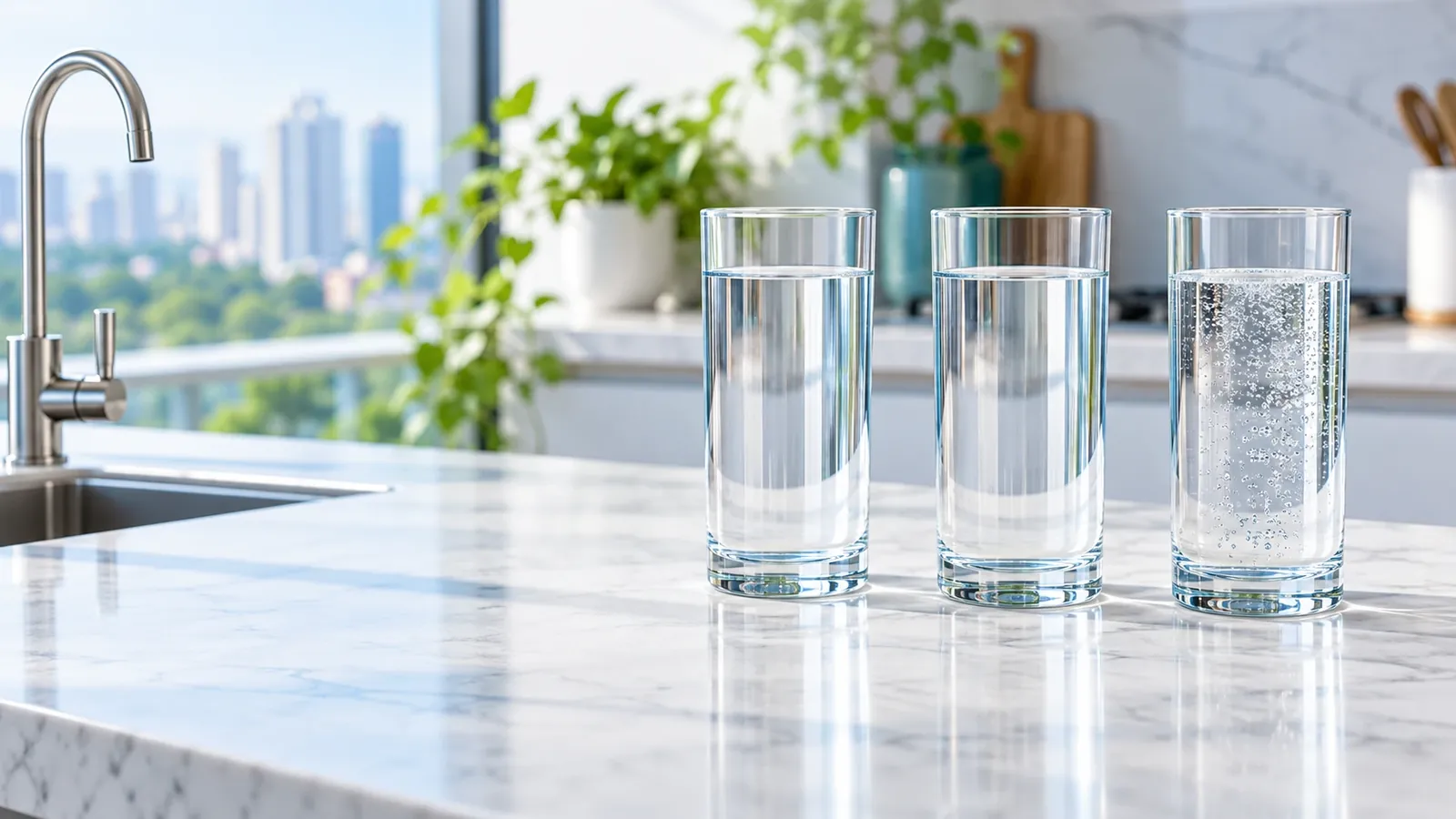
RO water is water that has been pushed through a very fine filter to remove almost everything in it. Alkaline water has a higher pH than normal water. Hydrogen water is normal water with extra hydrogen gas dissolved in it. They are three different things, made in different ways, and they are often mixed up in adverts. This guide explains each one in plain words, what research does and doesn't show, and how to choose for your home.
This article is general information, not medical advice. None of these waters is a medicine.
The quick comparison
| RO water | Alkaline water | Hydrogen water | |
|---|---|---|---|
| What it is | Highly filtered water | Water with a higher pH (usually 8 to 9.5) | Water with dissolved hydrogen gas (H₂) |
| How it's made | Reverse osmosis membrane filter | Ionizer machine (electrolysis) or mineral cartridge | Electrolysis machine or tumbler, tablets or ready-made cans |
| Main purpose | Removing impurities | Changing the pH | Adding hydrogen |
| pH | Neutral to slightly acidic | Alkaline | Close to neutral |
| Minerals | Mostly removed | Kept or added | Depends on the water you start with |
| Taste | Very clean, sometimes "flat" | Smooth, slightly different | Like normal water |
| Upkeep | Filter and membrane changes, some waste water | Cleaning, cartridge or electrode care | Cleaning, follow the device's water guidance |
The short version: RO is about what is taken out of the water. Alkaline and hydrogen water are about what is changed or added. That is why some households use more than one.
What is RO water?
RO stands for reverse osmosis. Water is pushed under pressure through a membrane with extremely small pores. Most dissolved substances can't pass through, so they are flushed away, and clean water comes out the other side.
What RO is good at:
- It removes most dissolved solids, including many heavy metals, salts and other contaminants.
- It gives very consistent, clean-tasting water, which is why it is common in Malaysian homes, offices and water vending machines.
Things to know:
- It also removes minerals such as calcium and magnesium. Many people get these minerals mainly from food, but if you drink only RO water it is worth eating a varied diet. The World Health Organization has published a report on minerals in drinking water that looks at this question. Some RO systems add a remineralising stage for this reason.
- It produces waste water. Part of the water that goes in is flushed away with the impurities. Newer systems waste less than older ones.
- It needs regular filter and membrane changes, otherwise performance drops.
- RO water can be slightly acidic (a pH a little under 7), because it has so little dissolved in it to balance carbon dioxide from the air. This is normal and not a safety issue for most people.
What is alkaline water?
Alkaline water simply means water with a pH above 7. Normal tap water is usually close to 7. Alkaline water is typically around 8 to 9.5.
It is usually made in one of two ways:
- Water ionizers. These machines use electrolysis to split water into two streams: an alkaline one to drink and an acidic one for cleaning. Kangen water is a well-known brand name for water from this type of machine.
- Mineral cartridges or added minerals. Some filters and bottled waters raise the pH by adding minerals.
What does research say about alkaline water?
Claims that alkaline water "balances your body's pH" don't match how the body works. Your body keeps the pH of your blood in a tight range on its own, whatever you drink, and your stomach is strongly acidic. Health sources such as Mayo Clinic note that research on alkaline water is limited, and that for most people plain water is fine for staying hydrated. Some people simply prefer its taste.
Things to know:
- Ionizers often cost several thousand ringgit, and the plates and filters need care.
- Very high-pH water can taste bitter, and machines usually let you choose a lower setting for drinking.
- If you have a kidney condition or take regular medication, ask your doctor before changing what you drink every day.
What is hydrogen water?
Hydrogen water is ordinary drinking water with extra hydrogen gas (H₂) dissolved in it. It looks and tastes like normal water, and its pH stays close to neutral. Better devices make it with electrolysis and a membrane (often called SPE or PEM) that separates the hydrogen from unwanted by-products.
Researchers have studied molecular hydrogen since the late 2000s, mostly for its possible role in oxidative stress. Most human studies are small and short, results are mixed, and independent reviews say more research is needed. Hydrogen water may support general wellbeing as part of a healthy lifestyle. Individual experience varies, and it is not a treatment for any illness.
We explain this in more detail in our guide What Is Hydrogen Water? Benefits, Side Effects and What the Research Really Says.
Alkaline water vs hydrogen water: aren't they the same?
No, and this is the most common mix-up.
- Alkaline water is about pH. It is measured with a pH meter.
- Hydrogen water is about dissolved hydrogen gas. It is measured in ppm or ppb, and its pH can stay neutral.
Some alkaline ionizers also release a little hydrogen as a side effect of electrolysis, which is why the two are often sold together. But a machine designed around pH is not the same as one designed to make hydrogen-rich water. If hydrogen is what you want, ask the seller how much hydrogen the exact model makes and how that was tested.
Which suits your home?
There is no single "best water". It depends on what you want to fix or improve.
Choose RO if:
- you are mainly worried about what is in your tap water, for example in an older building, or you rely on a rooftop tank
- you want consistent, clean-tasting water for drinking and cooking
- you are fine with changing filters and some waste water
Consider alkaline water if:
- you prefer its taste
- you understand the research is limited and are buying it as a preference, not as a health fix
Consider hydrogen water if:
- you are curious about hydrogen water as a daily hydration habit
- you want water that is close to neutral pH and tastes like normal water
- you are happy to drink it fresh, soon after it is made, because hydrogen escapes over time
Can you combine them? Yes. Many households filter their water first and then use a hydrogen water machine or tumbler with that purified water. Filtration takes care of what comes out of the tap; the hydrogen device adds hydrogen to clean water. Check your device's manual for the type of water it needs.
What to check before buying any water machine in Malaysia
| What to check | Why it matters |
|---|---|
| What the machine actually does (filters, changes pH, or adds hydrogen) | So you buy the right type for your goal |
| Test reports for the exact model | A certificate should match the model you are buying |
| Running costs (filters, membranes, cartridges, electricity, waste water) | The yearly cost can matter as much as the price |
| Ease of cleaning | Any water device needs regular cleaning to stay hygienic |
| Warranty and service in Malaysia | You will want local support and spare parts |
| Honest claims | Be wary of any seller who promises a water will cure or prevent disease |
| Can you try it first? | Taste the water and see the machine working before you pay |
Try hydrogen water at Bio Young Wellness, free
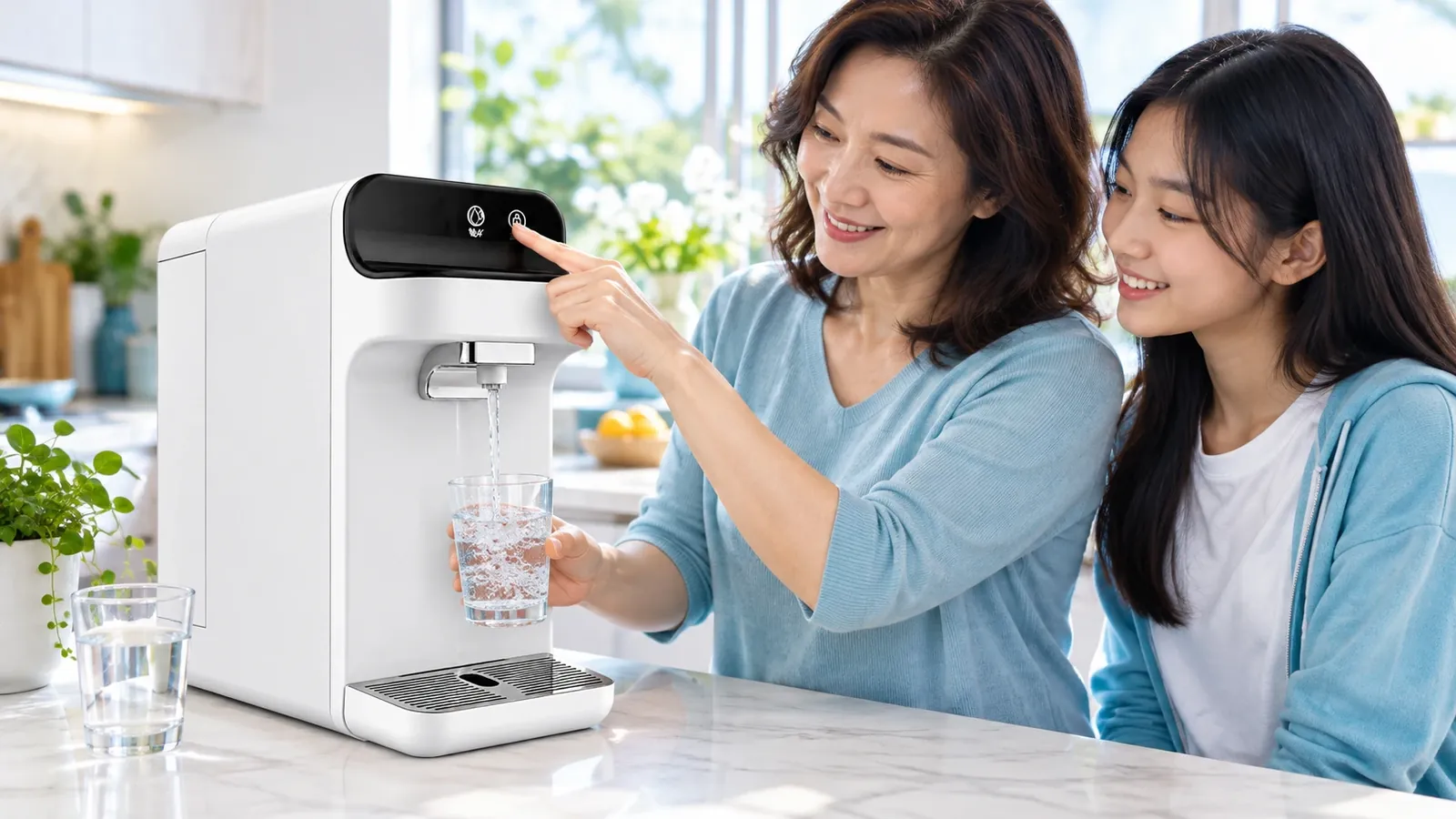
If hydrogen water is the one you are curious about, our EzyLife Hydrogen-Rich Water Machine makes hydrogen-rich water from purified water using pure-water electrolysis, with titanium-platinum electrodes and UV purification. It also gives you room-temperature, warm, tea and boiling water from the same countertop machine. RM7,990 with a 1-year warranty.
For hydrogen water outside the home, the EzyLife Hydrogen-Rich Water Tumbler is a rechargeable portable option, from RM1,280.
We'd rather you try before you decide. You're warmly invited to visit our Bukit Jalil experience centre for a free trial. Taste the water, see how the machine works, and ask our team anything, including how it fits with the filter you already use.
📍 No. 8-1, Blok 1, Jalil Link, Jalan Jalil Jaya 1, Bukit Jalil, 57000 Kuala Lumpur
🕙 Monday to Friday, 10am to 6pm (weekend appointments can be arranged on request)
💬 WhatsApp 011-1204 0485 to book your free trial
Have a question about your own health before you change what you drink? Our nutritionist Andrea can give general nutrition and wellness guidance on WhatsApp 012 952 8076.
Frequently asked questions
Is RO water safe to drink every day?
Yes, for most people RO water is safe to drink. Because it removes minerals, eat a varied diet, or choose a system with a remineralising stage.
Is alkaline water better than normal water?
Research doesn't show clear benefits for most people. Your body controls its own pH. Drink it if you like the taste, but plain clean water is fine for staying hydrated.
What is the difference between alkaline water and hydrogen water?
Alkaline water has a higher pH. Hydrogen water has dissolved hydrogen gas and usually stays close to neutral pH. They are made and measured differently.
Is Kangen water the same as hydrogen water?
Kangen water is a brand of alkaline ionized water. Ionizers may release a little hydrogen, but they are designed around pH. A hydrogen water machine is designed to add hydrogen.
Can I use RO water in a hydrogen water machine?
Many hydrogen water devices are designed to work with purified water. Always follow the manual for your exact model.
Which water is best for my family?
It depends on your tap water and what you want. Filtration (such as RO) deals with impurities. Hydrogen and alkaline machines change the water in other ways. If you have a health condition, ask your doctor first.
Where can I try hydrogen water in Kuala Lumpur?
You can book a free trial at the Bio Young Wellness experience centre in Bukit Jalil. WhatsApp 011-1204 0485.
Further reading
- World Health Organization (2005). Nutrients in drinking-water.
- Mayo Clinic. Is alkaline water better for you than plain water?
- Dhillon G. et al. (2024). Hydrogen Water: Extra Healthy or a Hoax? US National Library of Medicine.
Disclaimer: Bio Young Wellness products are wellness products. They are not intended to diagnose, treat, cure or prevent any disease, and they do not replace medical care or prescribed medication. Individual experiences vary. Please consult your doctor about any health condition.