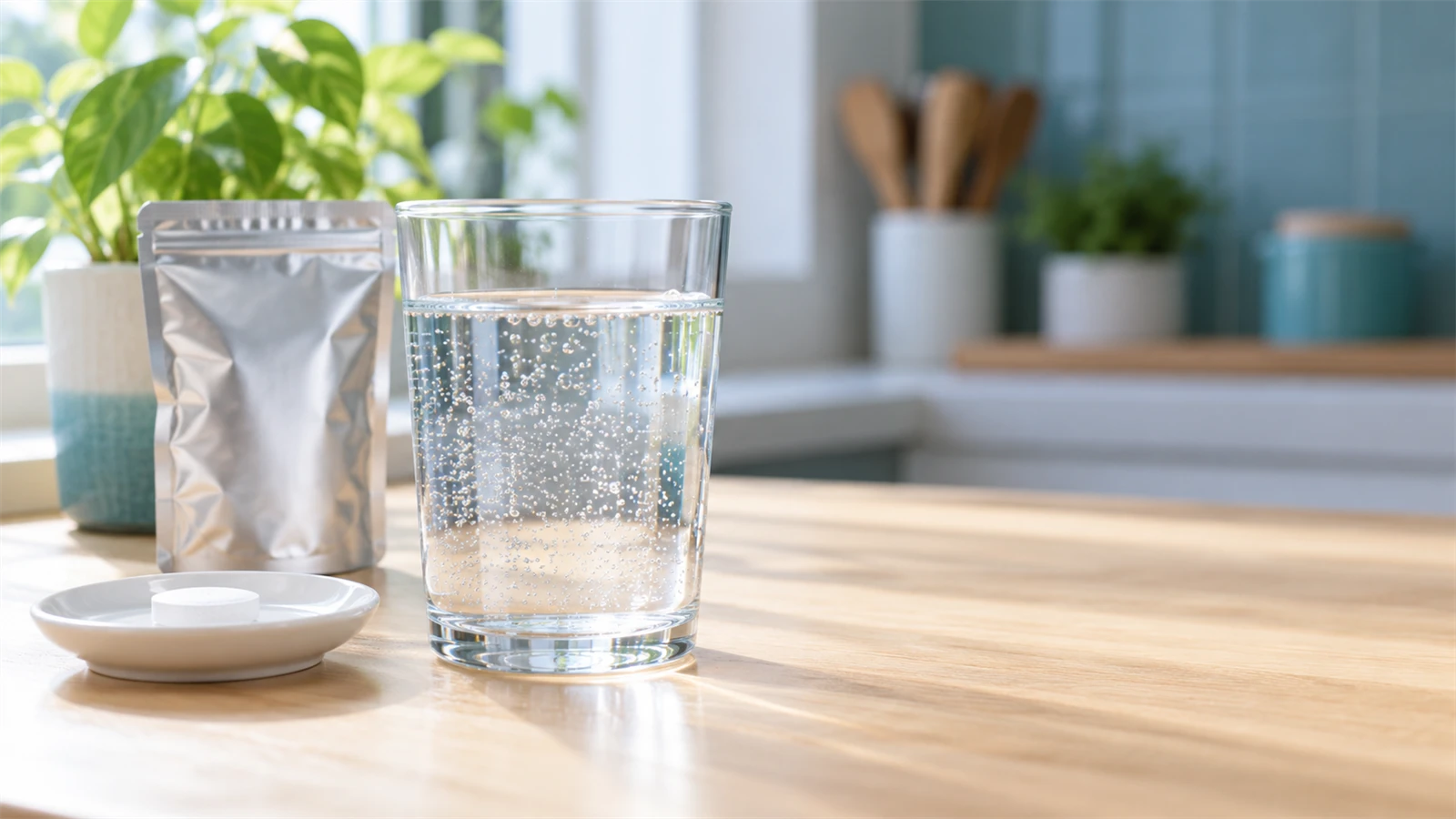
Hydrogen water is only as good as the hydrogen still in it when you drink it. That amount is measured in ppm (parts per million), and it changes quickly. It depends on how the water was made, what it is stored in, and how long ago it was opened. Most articles stop at "levels vary". This guide explains what the numbers mean, why hydrogen escapes, and how to check what you're actually getting.
This article is general information, not medical advice. Hydrogen water is a wellness drink, not a medicine.
What ppm means for hydrogen water
Hydrogen in water is measured as a concentration:
- ppm = parts per million. For water, 1 ppm is the same as 1 milligram of hydrogen per litre (1 mg/L).
- ppb = parts per billion. 1 ppm = 1,000 ppb. A label that says "1,200 ppb" means 1.2 ppm.
Hydrogen is a very light gas, so these numbers are small. A full litre at 1 ppm holds just one milligram of hydrogen.
How much hydrogen can water hold?
At normal air pressure and room temperature, water can hold about 1.6 ppm of hydrogen at most. Scientists call this the saturation point. Think of it as a full glass: you can't pour in more without spilling.
Some products claim more than 1.6 ppm. This is possible for a short time if the water is made or sealed under pressure, much like a can of soft drink holds extra fizz. Once the water meets normal air, the extra hydrogen leaves quickly and the level falls back towards, and then below, 1.6 ppm.
What this means for you: a very high number on a label tells you what the water held at the start under ideal conditions. It doesn't tell you what's left in your glass. In the 2016 Japanese test, 3 of the 5 bottled brands that printed a hydrogen level measured lower than their label, and 2 brands in plastic bottles had no hydrogen at all when opened.
Why the hydrogen doesn't stay
Hydrogen is the smallest molecule there is. It slips out of water and through many materials easily. Three things speed this up:
- Open air. Once the water is poured or the lid is off, hydrogen escapes into the air. In 2016, Japan's National Consumer Affairs Center tested 19 hydrogen water products. Water from a machine poured into a cup kept only about 50–60% of its hydrogen after 1 hour. Opened bottles with the lid put back kept about 30–60% after 5 hours, and about 10% after a day.
- Shaking and stirring. Movement releases dissolved gas faster, as it does with a fizzy drink.
- The container. Hydrogen can pass slowly through ordinary plastic bottles. Aluminium cans and aluminium pouches hold it much better.
Warm water also holds less gas than cool water.
The simple rule: drink hydrogen water soon after it is made or opened, and keep the lid closed until then.
Cans, tablets or a machine: how they compare
Each way of getting hydrogen water has its own trade-offs:
| Type | How it works | Things to know |
|---|---|---|
| Cans and pouches | Hydrogen is added at the factory and sealed in | The level depends on the brand and how long it was stored. Check the "made on" date |
| Tablets | A magnesium tablet reacts with water and gives off hydrogen | Keep the cap on until it fully dissolves. Adds a little magnesium |
| Water machines | Electrolysis adds hydrogen to the water | Made fresh, so you drink it near its peak. Higher upfront cost, nothing to keep buying |
| Portable tumblers | A small electrolysis unit in a rechargeable bottle | Made fresh in minutes. Handy at work or outdoors |
For machines and tumblers, the type of electrolysis matters. Devices with an SPE/PEM membrane separate the hydrogen from by-products such as ozone and chlorine. For more on choosing a device, see our guide What Is Hydrogen Water?.
How to check how much hydrogen is in your water
You can't see, taste or smell hydrogen, so you need a test. Here are the common options:
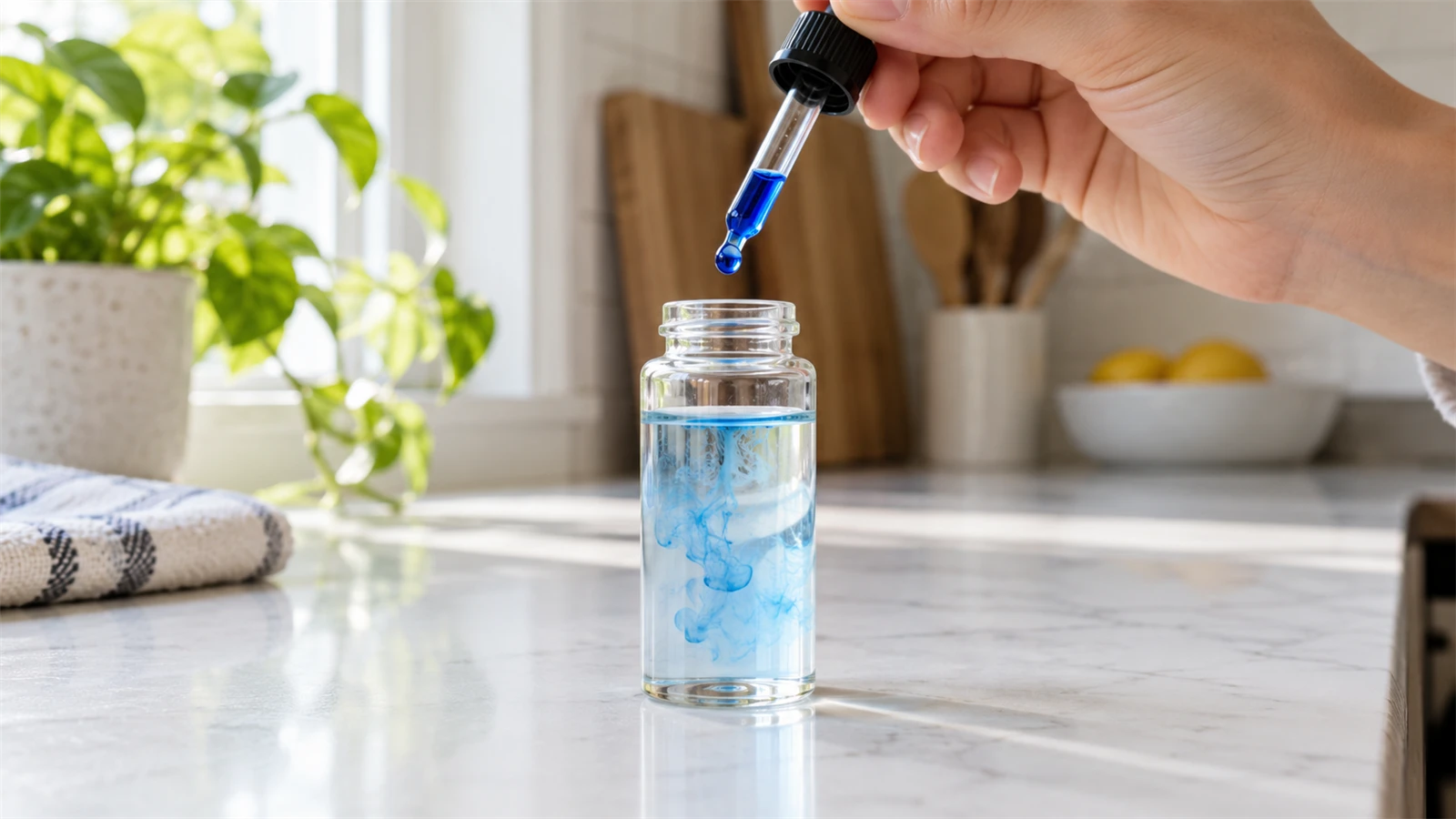
- Hydrogen reagent drops. These are blue drops (methylene blue with a platinum catalyst). Hydrogen turns each drop clear, and you count how many drops turn clear to estimate the ppm. A study published in Medical Gas Research in 2012 found that this method is accurate enough for everyday checks. It costs little, but it's a rough guide: read the instructions carefully and test straight away.
- Dissolved hydrogen meters. These are electronic probes made for measuring hydrogen. Good ones are accurate, but they cost more.
- ORP meters: not a reliable way to measure hydrogen. ORP (oxidation-reduction potential) shows a "negative" number that sellers sometimes use as proof of hydrogen. ORP changes with pH and other things in the water, so it can't tell you how much hydrogen is there. A 2022 review in Frontiers in Food Science and Technology advised against using ORP to measure or compare hydrogen water.
Tip: test the water the way you'd drink it, in your glass and at the moment you'd normally drink it, not straight from the machine's outlet.
How much hydrogen do you need?
There's no agreed answer. Studies have used different concentrations, amounts and timings, and the 2024 review "Hydrogen Water: Extra Healthy or a Hoax?" points out that this makes results hard to compare. Research on hydrogen water is still early, and larger, longer human studies are needed.
So be careful of any seller who claims an exact number is "the dose" you need, or that a higher ppm will give a particular result. Hydrogen water may support general wellbeing as part of a healthy lifestyle, and individual experiences vary. It doesn't replace good food, sleep, exercise or medical care.
Questions to ask before you buy
| Question | Why it matters |
|---|---|
| What hydrogen level does it make, and how was that tested? | A number means more with a test method and a report behind it |
| Is the test report for this exact model? | Reports for a different model don't count |
| What is the level in the glass, not just at the outlet? | That's what you actually drink |
| What type of electrolysis does it use? | An SPE/PEM membrane keeps by-products out of your water |
| What does it cost to keep using? | Cans and tablets add up. Machines may need parts or cleaning |
| Can I try it first? | Seeing it work and tasting the water beats any label |
Try fresh hydrogen water at Bio Young Wellness, free
Our EzyLife Hydrogen-Rich Water Machine makes hydrogen-rich water fresh from purified water, using SPE electrolysis with titanium-platinum electrodes. RM7,990 with a 1-year warranty. If you want it on the go, the EzyLife Hydrogen-Rich Water Tumbler makes it in 3 or 10 minutes, from RM1,280.
Curious about how hydrogen water compares with the water you already drink? See Hydrogen vs Alkaline vs RO Water.
The best way to judge is to try it yourself. You're warmly invited to our Bukit Jalil experience centre for a free trial. Taste the water, watch the machine at work, and ask us anything, including how we test it.
📍 No. 8-1, Blok 1, Jalil Link, Jalan Jalil Jaya 1, Bukit Jalil, 57000 Kuala Lumpur
🕙 Monday to Friday, 10am to 6pm (weekend appointments can be arranged on request)
💬 WhatsApp 011-1204 0485 to book your free trial
Have a question about your own health? Our nutritionist Andrea can give general nutrition and wellness guidance on WhatsApp 012 952 8076.
Frequently asked questions
What does ppm mean in hydrogen water?
It means parts per million. For water, 1 ppm is 1 milligram of hydrogen per litre. 1 ppm is the same as 1,000 ppb.
What is the maximum ppm of hydrogen water?
At normal air pressure and room temperature, about 1.6 ppm. Water made or sealed under pressure can hold more for a short time, but the level falls once it is opened.
How long does hydrogen stay in water?
Not long once the water is open to air. In a Japanese government test, water poured into a cup lost about 40–50% of its hydrogen within an hour. Drink it soon after it is made or opened, and keep the lid closed until then.
Do hydrogen water tablets work?
Magnesium tablets do release hydrogen when they dissolve. How much you get depends on the tablet, the water and whether the bottle stays closed. They also add a little magnesium.
Can I test hydrogen water at home?
Yes. Hydrogen reagent drops give a rough reading for little cost, and a dissolved hydrogen meter is more accurate. ORP meters don't measure hydrogen reliably.
Does more hydrogen mean better results?
Not necessarily. No amount has been agreed, and research is still early. Be wary of anyone promising a specific result from a specific ppm.
Where can I try hydrogen water in Kuala Lumpur?
Book a free trial at the Bio Young Wellness experience centre in Bukit Jalil. WhatsApp 011-1204 0485.
Further reading
- Dhillon G. et al. (2024). Hydrogen Water: Extra Healthy or a Hoax? A Systematic Review US National Library of Medicine.
- Seo T. et al. (2012). A convenient method for determining the concentration of hydrogen in water: use of methylene blue with colloidal platinum Medical Gas Research.
- LeBaron T.W. and Sharpe R. (2022). ORP should not be used to estimate or compare concentrations of aqueous H2 Frontiers in Food Science and Technology.
- National Consumer Affairs Center of Japan (2016). Test of bottled hydrogen water and hydrogen water generators (in Japanese).
- MD Anderson Cancer Center. Hydrogen water: Does it have health benefits?
Disclaimer: Bio Young Wellness products are wellness products. They are not intended to diagnose, treat, cure or prevent any disease, and they do not replace medical care or prescribed medication. Individual experiences vary. Please consult your doctor about any health condition.